Light-speed delay is the mechanic, not the bug.
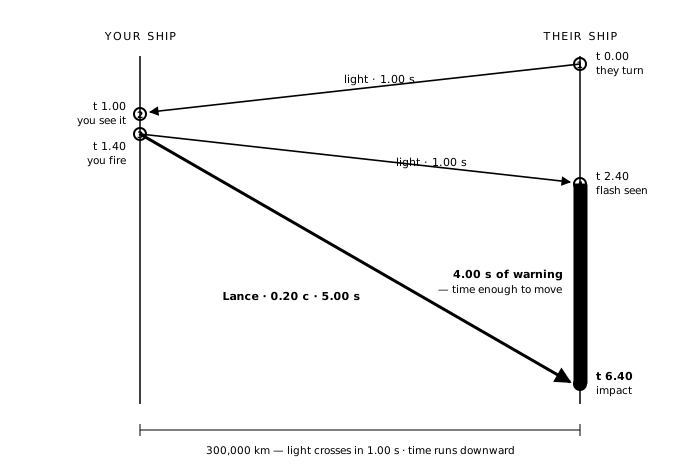
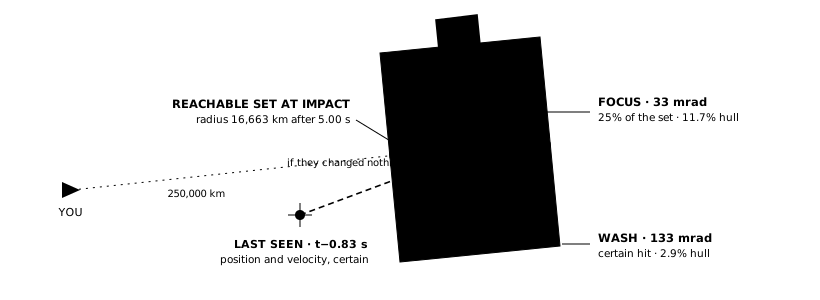
Two ships, alone in empty space, far enough apart that light takes a noticeable while to cross. You never see where your opponent is, only where their light says they were. Closing range buys you truth and costs you time to react.
One exchange
Where they can be
How it plays
First-person cockpit. The Lance is locked to the centre of the view, so to aim you turn the ship, and the ship turns at 60° per second: a reversal is a three-second commitment. WASD thrust in the ship's frame at full power from the first tick. Heat gates the weapon; venting clears it and venting is what gives you away. Run dark and you widen their picture of you, and yours of them, because the array you shut down is your own.
Four modes: against the bot, hotseat on one machine, the bot over the network, and online between two browsers with a paste-code invite. The simulation is deterministic and lockstep, and a replay-hash gate keeps it that way.
Read the design
design.md is the spec and every number in it matches the shipped constants. netplay.md is the netcode and the plan for the relay. concepts.md is the eight-concept round this came out of, and why it won.